Is the dream of walking out your back door and stepping onto your boat calling your name? If you’re shopping Jupiter waterfront homes, you’re choosing one of Palm Beach County’s most rewarding lifestyles. But great water views are only half the story. The smartest buyers also look at boat access, seawall and dock health, permitting history, and insurance details before they write an offer. This guide gives you the essential checks, local context, and practical steps to buy with confidence. Let’s dive in.
Why Jupiter waterfront
Jupiter anchors northern Palm Beach County and offers a wide range of waterfront options, from canal homes to Intracoastal estates and oceanfront properties. You can find everything from relaxed boating neighborhoods to trophy addresses with direct ocean access. The right choice depends on your boat, how you plan to use the water, and your comfort with maintenance and insurance.
Recent markets have shifted. The 2025 to early 2026 period saw cooling and a wider spread between list and sold prices. That makes due diligence and strong comps even more important when you evaluate value and structure an offer.
Market snapshot and price bands
Use these ranges as planning anchors rather than firm promises. Canal homes often start in the mid six figures and can run into the low seven figures, with deeper, wider canals and long frontage pushing into higher ranges. Direct Intracoastal lots commonly sell from about the low millions into the upper single digits, depending on frontage, depth, and improvements. Oceanfront and inlet-adjacent addresses sit in the premium tier, from multi-million to the tens of millions for top-tier estates. Always rely on live neighborhood comparables before finalizing pricing.
Waterfront types explained
Canal frontage
Canal homes can offer a more accessible entry point to private dock ownership. You often get calmer water and a protected setting. The tradeoffs are draft limits at low tide, potential fixed bridges on the route to the Intracoastal, and variable dredging responsibilities. Verify low-tide depth at the dock and any recorded dredging history for the canal.
Intracoastal frontage
Intracoastal Waterway properties usually offer deeper water and wider channels that are better for larger boats. You’ll enjoy easier cruising and access to marinas and services. Expect more through-traffic and wake, plus possible HOA or marina rules on slip use. Confirm whether any slips are deeded or licensed and review recorded easements around the dock area.
Oceanfront and inlet
Oceanfront delivers the ultimate lifestyle premium: private beach access, sunrise views, and immediate ocean proximity. Inlet-front or beach settings also carry higher exposure to erosion, storm surge, and renourishment cycles. Budget for specialized insurance and resilience planning if true oceanfront is your goal.
Boat access matters
Bridges and clearances
If boating is part of your plan, bridge height and opening schedules can make or break a property. Recent projects have changed the local picture. For example, the FDOT US-1 bridge replacement in Jupiter increased navigational clearance, which can impact travel time and boat size options. Confirm current vertical clearance and opening times for every fixed or movable bridge along your route to open water.
The inlet and dredging
Depth is dynamic in coastal environments. The Jupiter Inlet District maintains the sand trap and runs periodic bypass and dredging projects that affect navigation and nearby beaches. Review current and forecasted work using the Jupiter Inlet District’s dredging and beach nourishment updates. Ask for recent soundings and check whether any planned projects could affect your boating route or beach conditions.
Practical boat checks
Confirm these items during your inspection period:
- Low-tide depth at the dock and along the route to the inlet.
- Any fixed bridges on your route, their clearances, and opening schedules if applicable.
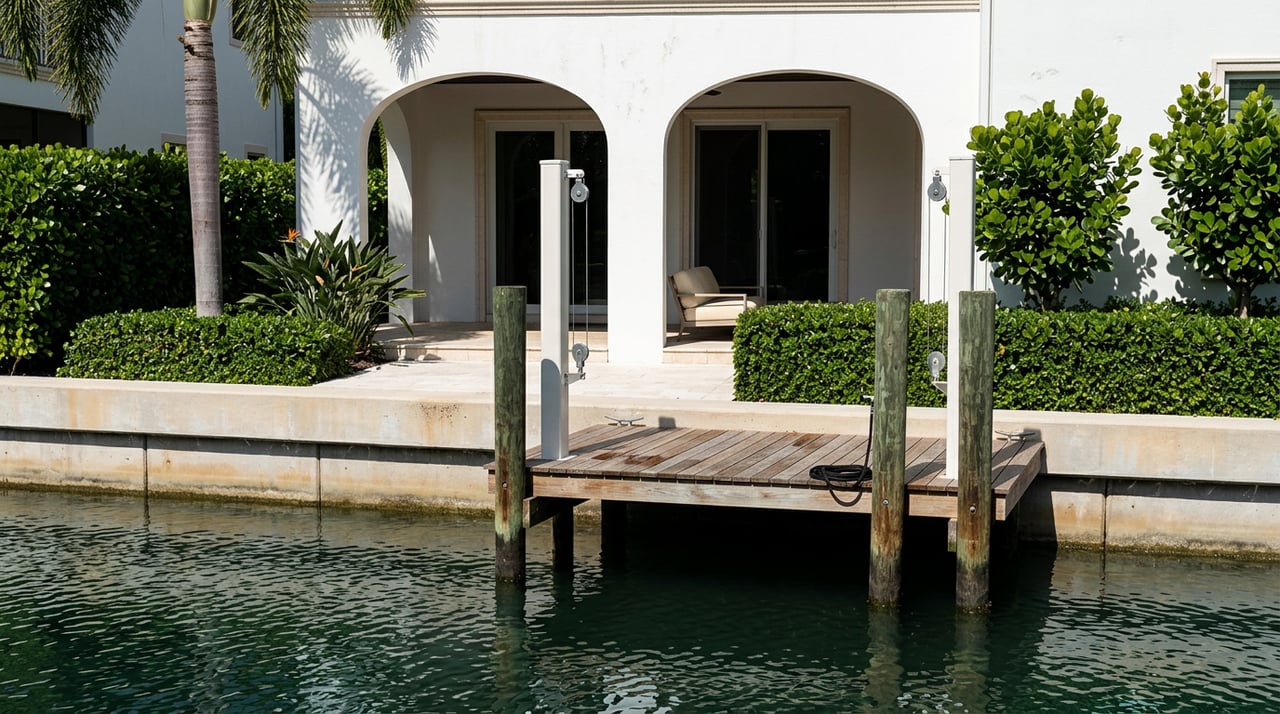
- Dock length, lift capacity, power and water service records, and whether the slip is deeded or licensed.
- Known shoaling issues and recent dredging records for the area.
Seawalls, docks, and permits
What to request from the seller
Waterfront improvements sit at the heart of your investment. Ask for copies of permits, final inspections, contractor invoices, warranty records, and any engineering reports for seawalls, docks, and lifts. The Town of Jupiter requires permits and may coordinate with state and federal agencies for marine work. Review the town’s guidance and confirm there are no open or expired permits using the Town of Jupiter permitting FAQ for marine facilities.
Inspections and red flags
A standard home inspection is not enough for waterfront. Order a written seawall assessment by a licensed marine or structural engineer, and arrange a dock and piling inspection. Underwater components matter. A good seawall inspection checks for panel cracking, rotation, cap and tieback corrosion, and evidence of voids or sinkholes behind the wall. For a quick primer on what pros look for, review these seawall maintenance and condition tips.
Submerged lands and title
Florida’s sovereignty and submerged-lands rules can affect docks and riparian rights. Confirm whether any structures extend over state-owned submerged lands and whether a lease or authorization is on file. Ask your title company or closing attorney to include riparian rights in the opinion and to review any leases or easements. You can reference Florida’s framework on sovereignty lands in Section 253.03, Florida Statutes.
Repair and replacement costs
Marine work is site-specific. Many Florida sources place residential seawall replacement at a few hundred to more than a thousand dollars per linear foot, depending on material, access, and permitting. Treat this as a starting point and get local contractor estimates early. For ballpark context, see this overview of seawall costs.
Insurance, flood, and financing
Flood insurance basics
Flood coverage and lender requirements hinge on the property’s elevation, location, and construction. FEMA’s Risk Rating 2.0 changed NFIP pricing to be property-specific, factoring in elevation, distance to water, foundation type, and rebuild cost. Review the program’s background in this Congressional Research Service summary, then pull the current flood map panel for your address via FEMA’s Map Service Center. Obtain written flood quotes early. Premiums can vary significantly by elevation and flood zone category.
Elevation certificates and map corrections
An Elevation Certificate prepared by a licensed surveyor can help clarify rating and sometimes reduce premiums. If data supports it, a Letter of Map Amendment may remove a structure from a mapped Special Flood Hazard Area. Add the Elevation Certificate to your inspection checklist and coordinate with your lender on timing.
Wind coverage and deductibles
Florida homeowner policies usually carry a separate hurricane or named-storm deductible that is a percentage of the dwelling coverage. Understand that percentage and how the trigger works before you bind. For options and definitions, review Citizens Property Insurance’s deductible guidance.
Practical quoting tips
Request 2 to 3 quotes for both homeowner and flood policies during your inspection period, and ask about mitigation credits for impact windows, roof attachments, and secondary water barriers. Confirm ordinance and law coverage for building-code upgrades after a loss, and align coverage effective dates with closing.
Smart offer and contract strategy
Make marine inspections a stated contingency in your offer: seawall engineering, dock and pile inspection, and insurance bindability within a set time frame. If an inspection finds issues, you can negotiate repair credits, seller-paid work before closing, or escrow holdbacks until a certified scope is complete. If dredging or inlet projects are planned nearby, use the Jupiter Inlet District updates to confirm whether any assessments or special district fees could apply.
Long-term planning and resilience
Sea levels and coastal conditions evolve over time. Use NOAA’s Sea Level Rise Viewer to understand longer-term scenarios for your location. If you are buying for decades of enjoyment, consider freeboard, site drainage, and elevation when comparing homes. For budgeting, plan reserves for seawall replacement, lift upgrades, dock rehab, and possible community dredging assessments over the life of ownership.
Quick due diligence checklist
- Permits and records: All permits, final inspections, warranties, and engineering reports for seawalls, docks, and lifts.
- Title and rights: Confirmation of riparian rights and any submerged-lands leases or easements.
- Marine inspections: Seawall engineering report; dock and pile inspection; boat-lift operational and electrical check.
- Boat access: Low-tide depth at dock; bridge clearances and schedules; maximum vessel size for the slip; nearest haul-out.
- Flood and insurance: FEMA panel from the Map Service Center; any existing Elevation Certificate; current insurance declarations and claim history; new quotes before removing contingencies.
- HOA or marina: CC&Rs, slip allocation rules, reserve study, recent minutes, and any special assessments tied to marine infrastructure.
Ready to find the right waterfront fit in Jupiter or the greater West Palm Beach–Boca Raton–Delray Beach corridor? You will get clear, development-informed guidance and a calm, efficient search from Elena Terrones. Let’s Connect.
FAQs
What is the difference between canal, Intracoastal, and oceanfront in Jupiter?
- Canal lots often offer calmer water and lower entry prices but may have draft limits and fixed bridges; Intracoastal frontage typically provides deeper water and easier cruising; oceanfront and inlet properties deliver the highest lifestyle premium with more exposure to erosion and storm surge.
How do bridge clearances affect boat size near Jupiter?
- Your vessel’s height must match the lowest fixed span on your route; recent projects like the US-1 bridge replacement increased clearance, but you should confirm current clearances and opening schedules before assuming your boat will pass.
What should a seawall and dock inspection include for a Jupiter home?
- Order a seawall engineering assessment plus a dock and piling inspection that checks piles, hardware corrosion, lift capacity, wiring, and, if needed, underwater components; use guidance such as these seawall condition checks as a reference.
How do flood zones and Risk Rating 2.0 affect insurance costs in Palm Beach County?
- NFIP pricing under Risk Rating 2.0 is property-specific, factoring elevation, distance to water, and rebuild cost; verify your flood map panel at FEMA’s Map Service Center and obtain written quotes early to avoid surprises.
Who permits docks and seawalls in the Town of Jupiter?
- The municipality requires permits and may coordinate with state and federal agencies for marine work; review the town’s marine permitting FAQ and request all permits, final inspections, and warranties from the seller.
Are hurricane deductibles separate on Florida home policies?
- Yes, most policies have a separate percentage-based hurricane or named-storm deductible; review your options and triggers using Citizens’ deductible guidance.