If you are looking at Wellington equestrian real estate, you are not buying a typical suburban property. You are evaluating a niche asset tied to a global horse-sport calendar, seasonal demand, and specialized land use. That can create strong long-term potential, but only if you underwrite the property correctly. Let’s dive in.
Why Wellington works differently
Wellington is a specialty equestrian market with a structure that looks very different from a standard residential community. According to the Village of Wellington’s equestrian overview, the equestrian community is central to the area’s economy and physical layout, with the Equestrian Preserve Area covering about 9,000 acres and more than 580 farms supporting polo, dressage, hunter/jumper, and recreational riding.
That matters because long-term value here is tied to equestrian use, not just house size or general neighborhood trends. The village also notes that the Equestrian Overlay Zoning District was created to preserve equestrian character, while the Equestrian Preserve Committee reviews land-use, rider safety, flooding, and drainage issues. In other words, function and permitted use play a major role in value retention.
The area’s physical setup also supports that niche identity. Official village materials report more than 57 miles of trails on one page and over 100 miles of public bridle trails on another, likely based on different counting methods, while parcel sizes commonly range from 2 to 5 acres and farms can range from 1 to 200 acres. These details reinforce a simple point: Wellington equestrian property should be viewed as operating real estate, not just luxury acreage.
Global events drive local demand
Wellington’s equestrian market is tied to an international competition schedule. Wellington International describes its venue as home to more than 40 weeks of competition and identifies WEF as the world’s largest and longest-running hunter/jumper horse show.
That global visibility expands the buyer and tenant pool far beyond local residents. After the 2025 season, Wellington International reported a $536.2 million economic impact for Palm Beach County, along with 31,000 competitors from more than 50 countries and all 50 states. For investors, that scale helps explain why this market can support premium seasonal demand.
The most important takeaway is that demand is event-driven. When a property sits near major equestrian venues and supports horse operations well, it may appeal to riders, trainers, owners, and related users who prioritize logistics, stall access, and travel efficiency over the factors that usually drive suburban leasing decisions.
Seasonality shapes investment returns
If you are evaluating income potential, seasonality should be one of the first things in your model. Wellington states that the equestrian season generally begins in November and runs through April, while Wellington International says WEF 2026 runs from December 31 through March 29 and AGDF 2026 runs from January 7 through March 29. That puts the strongest rental window in late December through March.
This is not a flat, twelve-month rental market. It is a seasonal market with premium weeks concentrated around overlapping winter events. A property that performs exceptionally well during peak season may have a very different income profile in the off-season.
The official WEF exhibitor guide makes that structure even clearer. It shows 2,200 on-site stalls available to rent weekly or seasonally, with pricing that varies by stall type and length of stay, and it also references off-site farm rentals in areas like Grand Prix Village, Palm Beach Point, Palm Beach Point East, and Appaloosa Trail properties. That tells you the market rewards flexibility, proximity, and operational utility.
What makes a strong long-term equestrian investment
Long-term performance in Wellington usually comes down to a few practical factors.
Location near key venues
In this market, convenience is part of the asset. Properties with useful access to major competition venues may have a stronger position for seasonal leasing and future resale to equestrian users. That does not guarantee performance, but it can support demand during peak season.
Functional horse infrastructure
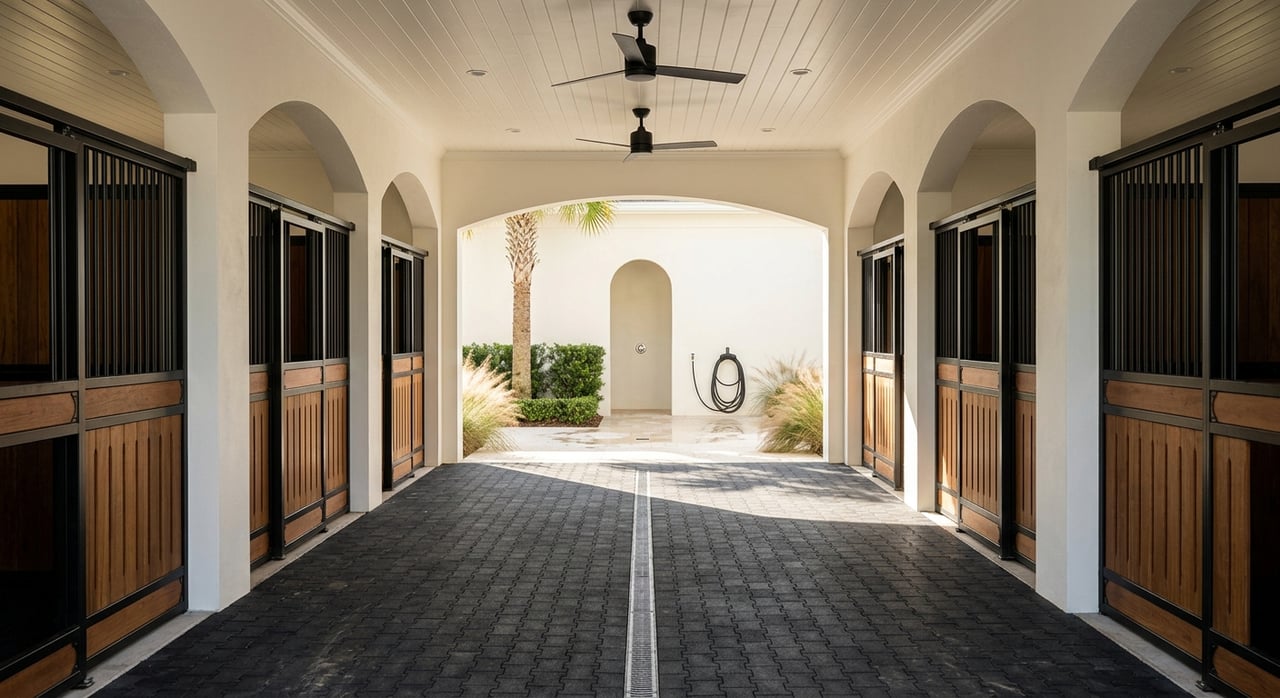
Barn quality, arena usability, paddock layout, trailer circulation, storage, and stable access often matter more than cosmetic finishes. In a specialty market, buyers and renters are often paying for how well the property works day to day.
Land use and equestrian fit
Permitted use is central to value. Since Wellington’s equestrian zoning and preserve policies influence land-use decisions, buyers should pay close attention to how a parcel is configured and documented, especially if they are planning improvements or a hybrid use strategy.
Drainage and storm readiness
A beautiful property can still become an expensive hold if drainage and storm planning are weak. Wellington specifically highlights flooding and drainage as review priorities within the equestrian area, which is one reason site condition can matter just as much as visible improvements.
How to underwrite the purchase
A Wellington equestrian property deserves a more detailed underwriting process than a standard home purchase. If you are comparing opportunities, these are some of the biggest variables to study.
Tax classification
According to the Palm Beach County Property Appraiser’s agricultural classification guidance, qualifying commercial agricultural properties, including equestrian uses, may be assessed on an agricultural use rate rather than market value. That can reduce tax burden, but the county also notes that tax savings are not automatic in every case and that losing the classification can trigger a major reassessment of the formerly classified acreage.
Timing matters too. New owners generally reapply between January 1 and March 1. The same county guidance also notes that if a homesteaded parcel qualifies, barns, arenas, and storage structures may move from the 3% cap to the 10% cap, which is another detail worth reviewing before you close.
Horse capacity assumptions
The county also lists a common industry benchmark of 2 full-sized horses per acre for equestrian use. That is not a zoning rule, but it is a useful operating reference when you are evaluating whether a parcel can support your intended use and still align with agricultural treatment standards.
Seasonal income modeling
Do not project income as if every month performs the same way. The WEF exhibitor guide distinguishes between weekly and seasonal stall leasing and notes variable pricing by stay length and stall type. A realistic model should test at least two cases: a strong winter season and a softer off-season.
Carrying costs
Storm prep and insurance are recurring costs in South Florida. Wellington’s hurricane preparedness guidance advises residents to review insurance coverage, while the village’s equestrian-focused guidance includes practical steps like storing water, feed, and hay, planning for generator needs, and securing movable objects. For a farm owner, these are part of the operating budget.
Why drainage and pasture matter so much
One of the biggest mistakes investors make is focusing too heavily on the barn and residence while underestimating the land itself. In Wellington, drainage, footing, paddock usability, and pasture condition often have a direct impact on operating performance and maintenance costs.
The village notes ongoing investment in drainage systems and identifies flooding and drainage as active areas of oversight within the equestrian community. That is your cue to look closely at water movement, low spots, and how the property performs after heavy rain.
UF/IFAS guidance on pasture management adds another important layer. It states that pasture establishment is the most expensive phase of pasture management, that soil drainage is critical, and that soil testing, liming, fertilization, and weed control are part of maintaining productive pasture. It also notes that some forage types perform poorly in flooding or weak drainage conditions.
For many buyers, that means the smartest renovation budget is not always the most visible one. Improvements to drainage, irrigation, footing, paddocks, and pasture systems may offer more practical value than cosmetic upgrades alone.
Renovations that can protect value
In this market, the best capital improvements are often functional. Wellington International’s FEI barn renovation included 130 new stalls, rubber aisle flooring, upgraded electrical and plumbing, and expanded pathways, while another project added a covered arena for year-round training and competition.
That is a strong market signal. Safety, durability, weather resilience, and operational efficiency appear to matter more than decorative upgrades when serious equestrian users evaluate a property.
If you are planning to buy and improve, it may help to prioritize projects in this order:
- Drainage and site performance
- Barn systems and stall functionality
- Arena and training usability
- Paddocks, irrigation, and pasture health
- Cosmetic upgrades to the residence or common areas
This kind of sequencing can support both usability during ownership and resale appeal later.
Exit strategies are more specialized
One reason Wellington equestrian assets can be compelling long-term investments is that they serve a specialized market. The flip side is that your exit strategy is also more specialized than with a standard single-family property.
Based on local market structure and official leasing materials, three common long-term paths stand out:
Owner-user hold
This approach fits buyers who want to use the property for their own equestrian operation while benefiting from long-term ownership in a niche market.
Seasonal leasing
This strategy focuses on capturing peak winter demand tied to the competition calendar. Success often depends on location, stall quality, and how easily the property supports short-term operational needs.
Hybrid investment hold
A hybrid strategy blends personal use or long-term ownership with seasonal monetization during the winter circuit. For many investors, this can be the most practical way to balance income potential with year-round carrying costs.
Because resale buyers are often other riders, trainers, or equine operators, the strongest exit usually comes from preserving and improving the property’s equestrian function. In this market, utility supports value.
If you are considering a Wellington equestrian property as a long-term investment, the key is to treat it like a business-backed real estate asset, not just a luxury purchase. When you underwrite seasonality, tax treatment, drainage, infrastructure, and specialized resale demand from the start, you put yourself in a much better position to make a smart decision. If you want help evaluating a Wellington opportunity with a practical, ROI-focused lens, connect with Elena Terrones.
FAQs
What makes Wellington equestrian properties different from other luxury homes?
- Wellington equestrian properties operate within a specialized market shaped by equestrian zoning, horse infrastructure, seasonal event demand, and a global competition calendar rather than typical suburban housing trends.
How long is the Wellington equestrian rental season?
- Wellington says the season generally runs from November through April, with the strongest premium demand typically concentrated from late December through March during major winter events.
Can a Wellington horse property qualify for agricultural tax classification?
- Some equestrian properties may qualify for agricultural classification if they meet Palm Beach County requirements for good-faith commercial agricultural use, but buyers should verify eligibility and reapplication timing carefully.
What should investors review before buying a Wellington farm?
- Investors should review location, permitted use, tax classification, horse capacity, storm and insurance costs, drainage, pasture condition, and the property’s ability to perform during both peak season and off-season.
Which improvements add the most value to Wellington equestrian real estate?
- Functional improvements such as drainage work, stall upgrades, electrical and plumbing updates, arena usability, paddock improvements, and pasture management often matter more than cosmetic upgrades alone.
What is the best exit strategy for a Wellington equestrian investment property?
- The best exit strategy depends on your goals, but common paths include owner-user resale, seasonal leasing, or a hybrid hold designed to capture winter demand while preserving long-term equestrian utility.